Understanding shingles · Laval and Greater Montreal
Shingles. Symptoms, treatment and medical care in Laval and Montreal
Shingles develops when the chickenpox virus becomes active again. It often causes a painful rash on one side of the body. Small blisters may also appear. A prompt assessment helps confirm the diagnosis and explore treatment options.
Clinique LABELLE offers medical consultations for skin concerns in Laval, serving patients from Greater Montreal. This guide explains shingles symptoms, treatment options, warning signs and prevention. It also explains how to protect people around you.
Tell us when your rash started. The clinic must confirm appointment availability.
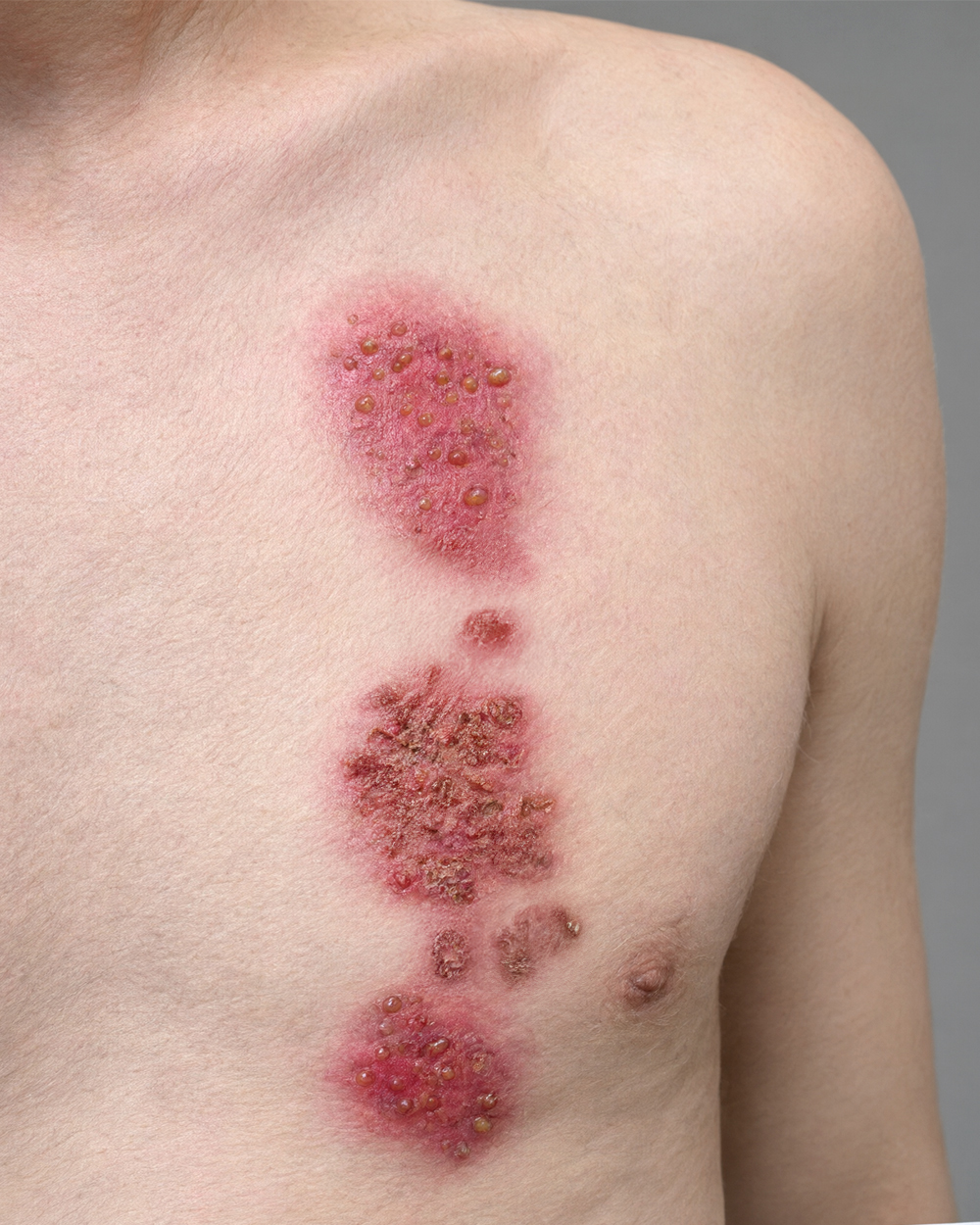
A shingles rash can appear on one side.
01 / RECOGNIZE
Recognizing the early signs of shingles
Burning, tingling or unusual skin sensitivity can start before the rash. Then, small blisters containing fluid often appear in clusters. The Public Health Agency of Canada explains these shingles symptoms.
After chickenpox, the virus stays inactive in certain nerve structures. Reactivation can cause a rash along the affected nerve. DermNet’s guide to herpes zoster explains this process.
A rash usually affecting one side
Shingles often affects the chest, back or part of the face. The rash usually follows a strip of skin and rarely crosses the body’s centre. However, unusual patterns can occur, especially with a weakened immune system.
The rash may look red, purple, brown or grey, depending on your skin tone. American Academy of Dermatology photos and descriptions illustrate these differences. However, comparing your skin with a photo cannot confirm a diagnosis.
Symptoms to consider together
- Pain or itching in a specific area.
- Clusters of blisters on sensitive skin.
- Discomfort when clothing touches the affected area.
- Sometimes, fever, chills or a headache.
The CDC outlines shingles symptoms and possible complications. For assessment options, visit our dermatological consultations page. Meanwhile, our skin conditions guide covers other common concerns.
03 / UNDERSTAND
How is shingles diagnosed?
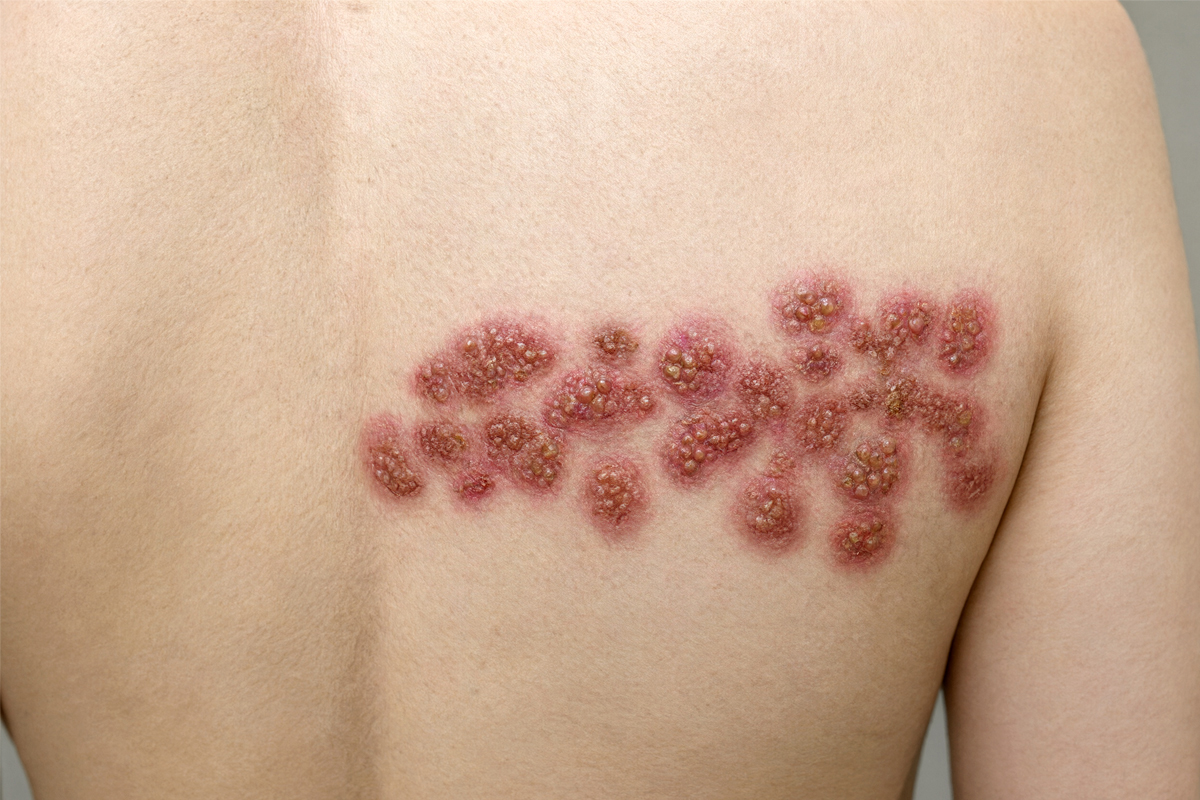
Blisters may form clusters on the skin.
Doctors often diagnose shingles through a skin examination and your symptom history. They check when symptoms began, where the rash appears and how the pain feels. They also look for signs of other conditions.
Contact dermatitis, herpes simplex and some skin infections can resemble shingles. The CDC describes conditions that can be mistaken for shingles. Therefore, pain alone or a photograph may not provide enough information.
When a skin sample may help
For unusual cases, a sample from a skin lesion can help confirm the infection. PCR testing for the varicella-zoster virus is a preferred laboratory method. However, testing is not necessary in every case.
Routine blood tests cannot confirm shingles on their own. However, other tests may help answer a different medical question. Our blood testing service in Laval explains how requested tests are arranged.
The limits of virtual care
A virtual consultation may help assess your needs, although some situations require an examination in person. Eye symptoms require urgent, appropriate assessment. Our telemedicine page explains this consultation option for patients in Laval and Montreal.
04 / FIND RELIEF
Shingles treatment and pain relief
Shingles treatment depends on the examination, symptom timing and risk of complications. Options may include antiviral medication, pain relief and skin care. Your clinician also considers your medical history and current medications.
Antivirals and the first 72 hours
Acyclovir, valacyclovir and famciclovir are antiviral medications used for shingles. The American Academy of Dermatology explains antiviral treatment. Prescriptions must suit your individual needs, including your kidney function.
Seek care even after 72 hours. Treatment may still be appropriate, depending on new blisters, symptom progression and your health. However, antivirals cannot guarantee freedom from persistent pain. A Cochrane review of postherpetic neuralgia prevention explains the evidence limitations.
Pain relief suited to your health
Your doctor or pharmacist can recommend pain relief that suits your health needs. Mention your allergies and usual medications. Mayo Clinic’s treatment guidance describes options for managing shingles and its pain.
If you have diabetes, discuss your follow-up care and any recent changes. Our diabetes management guide can help you prepare. Also, mention blood pressure medications. Our hypertension guide explains why regular monitoring matters.
Gentle skin care during recovery
Clean the affected area gently, and avoid scratching or bursting blisters. Loose clothing and cool compresses may improve comfort. The AAD’s shingles self-care advice explains how to protect healing skin.
Ask for advice before applying creams to the rash. HealthLink BC’s shingles guide provides additional care information. Increasing redness, pus or worsening overall health requires another assessment.
06 / RECOVER
How long does shingles last?
Blisters usually crust over within seven to ten days. The rash often heals within two to four weeks. These CDC recovery timeframes are general guides. Pain can continue after the skin has healed.
01
Early symptoms Pain or tingling may start before the rash.
02
Over several weeks The skin gradually heals, although recovery varies.
03
If pain continues Follow-up care helps adjust pain relief and check for complications.
Understanding postherpetic neuralgia
Nerve pain can persist in the affected area after the skin heals. This complication is called postherpetic neuralgia, sometimes written as post-herpetic neuralgia. The NHS explains persistent shingles pain and treatment options. Seek support if pain disrupts your sleep or daily activities.
Treatment may require specific medications and several adjustments. Our ongoing medical care page explains follow-up options. Depending on your needs, a referral to a specialist team may also be appropriate.
In Montreal, the MUHC’s Alan Edwards Pain Management Unit provides information about accessing specialist pain care. Its website explains the referral process. Your clinician can help determine whether a referral suits your needs.
Persistent pain can also affect your mood. Discuss these effects during follow-up appointments. If anxiety or low mood becomes difficult, our mental health consultations page describes another area of care.
07 / PREVENT
Shingles vaccination in Quebec
Reviewing your options for prevention.
Vaccination helps prevent shingles and its complications. However, it does not treat an active rash. The Canadian Immunization Guide’s shingles vaccine recommendations explain national guidance and individual considerations.
Vaccine recommendations and public coverage
The recombinant shingles vaccine, Shingrix, is recommended for adults aged 50 and older. It is also recommended from age 18 for people who are, or will become, immunocompromised. However, Quebec’s publicly funded program has separate eligibility criteria.
Two doses are required. The interval depends on applicable recommendations and your circumstances. If you have had shingles, ask when vaccination would be appropriate. Also, mention any treatment that affects your immune system.
Reviewing prevention after recovery
Your health care professional can review your medical history and immunization record. A health checkup can also provide an opportunity to discuss prevention. However, it does not replace prompt care for an active rash.
The chickenpox vaccine serves a different purpose and belongs to Quebec’s childhood immunization schedule. The official chickenpox vaccination page explains this program. For shingles vaccination, confirm the location and any fees before attending.
09 / CLINIQUE LABELLE
Shingles consultations in Laval and Greater Montreal
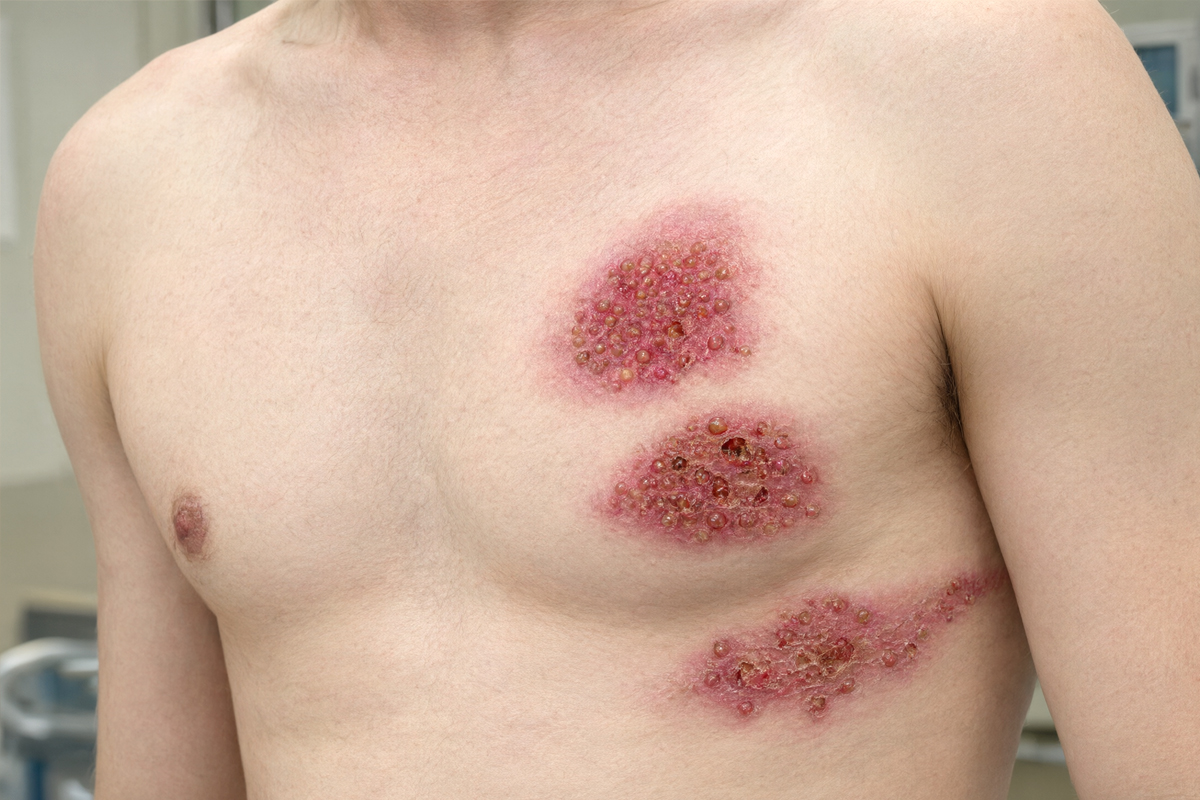
Recognize the rash. Seek medical advice promptly.
Clinique LABELLE is located in Chomedey, Laval, and also welcomes patients from Greater Montreal. Visit About Clinique LABELLE to learn about the clinic’s team and services.
Finding the right place for care
Looking for shingles treatment in Laval? A prompt medical assessment helps determine appropriate care. Our walk-in clinic page explains how to access consultations. Before visiting, confirm availability and tell reception about your rash.
Looking for care close to home? Our guide to finding a walk-in clinic near you explains what to check. If urgent warning signs appear, choose a service that can assess you without delay.
Confirming fees before your visit
Ask about consultation fees and what they include. Also, check potential costs for tests, medication and follow-up care. Our guide to walk-in consultations at LABELLE provides further information. Reception must confirm the fees for your visit.
10 / YOUR QUESTIONS
Frequently asked questions about shingles
YOUR NEXT STEP
A painful rash deserves prompt medical advice.
Note when symptoms began and request an assessment. If your face or eye is affected, seek urgent care. For other situations, reception can explain consultation options and availability.
This article provides general information. It cannot diagnose your condition or replace advice from a health care professional. International sources explain the condition. Local vaccine recommendations and coverage follow Canadian and Quebec guidance.